Overview
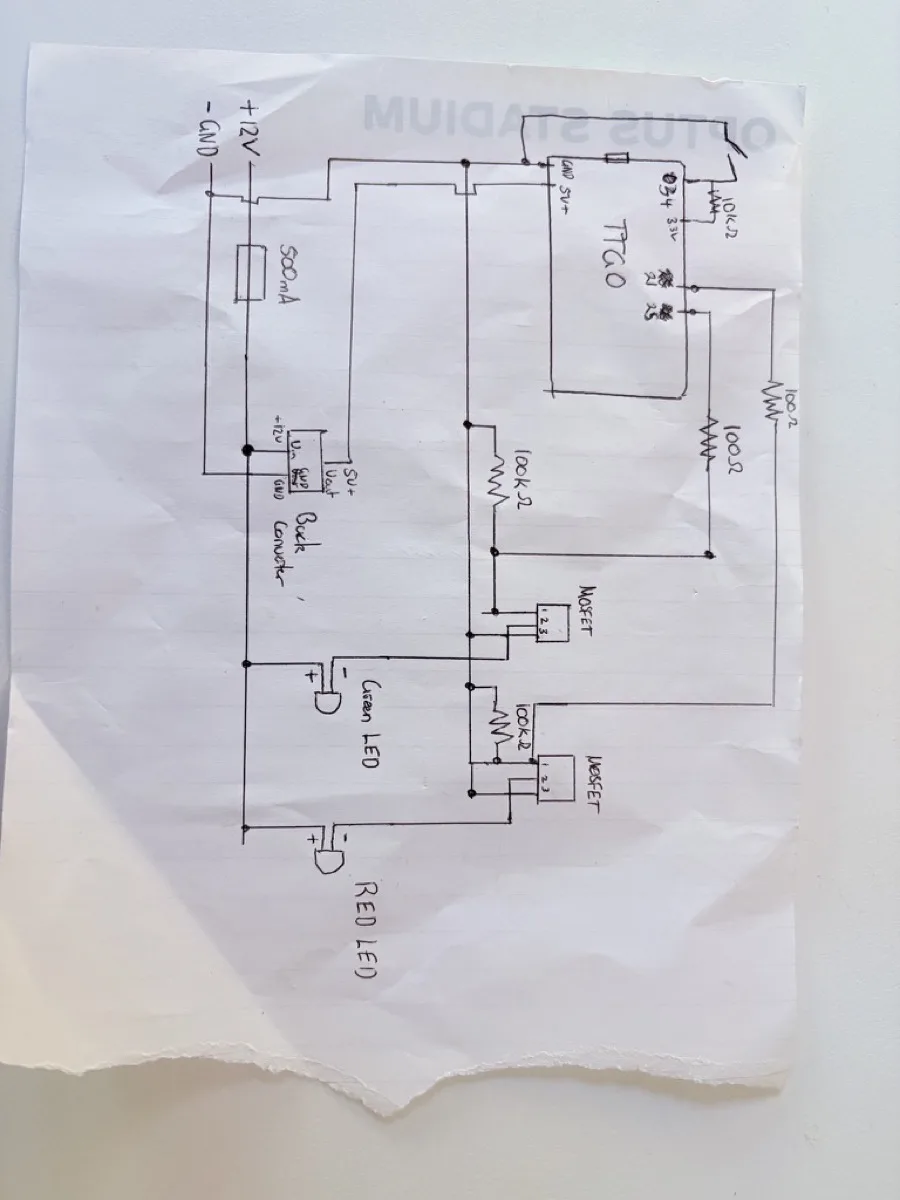
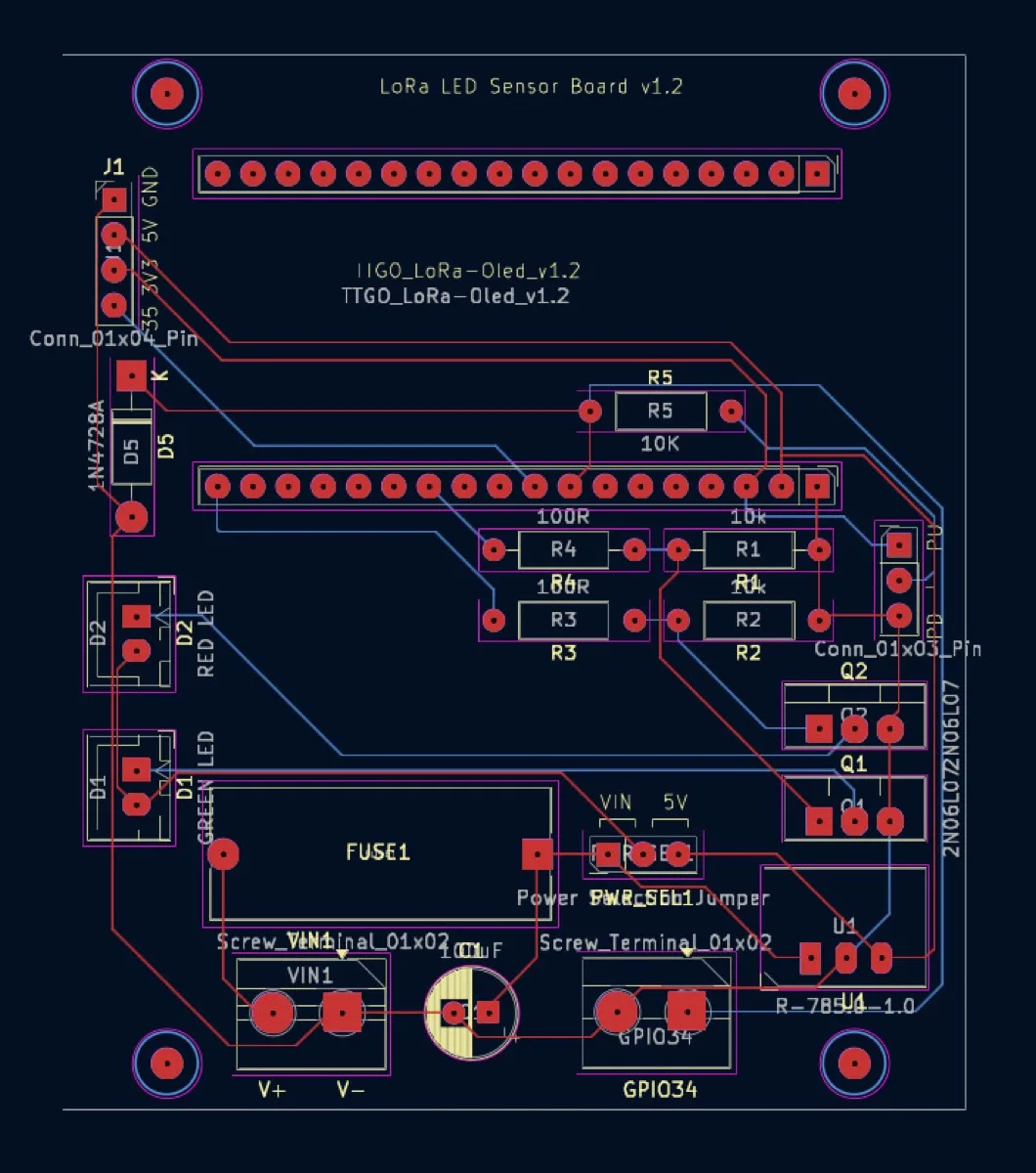
A low-cost IoT water level monitoring device providing visual status indication and remote telemetry for tanks, pits, and other liquid storage applications. This project demonstrates the complete hardware development lifecycle — from a hand-drawn concept sketch through KiCad schematic capture and custom PCB layout to a fabricated, functional prototype.
System Architecture
- TTGO LoRa ESP32 development board with float switch sensor input
- High-brightness 12V red/green status LEDs driven by logic-level N-channel MOSFETs
- 12V to 5V switching regulator and input protection components
- Custom PCB (LoRa LED Sensor Board v1.2) with configurable GPIO input biasing
- ESP32 PlatformIO firmware: sensor state monitoring, LED control, LoRaWAN telemetry framework
Development Process
The build ran through eight stages: requirements definition, concept sketching, KiCad schematic capture, PCB layout (power routing, signal integrity, manufacturability), through-hole prototype assembly, debugging and validation, Gerber generation and fabrication, and final device testing. Iterations along the way resolved GPIO pin allocation conflicts, MOSFET gate drive issues, and input conditioning behaviour.
Skills Demonstrated
- Electronic circuit design and KiCad schematic capture
- PCB layout, routing, and design rule checking
- Hardware debugging with bench supply and multimeter verification
- ESP32 embedded firmware development
- Prototype fabrication, test, and validation
Future Improvements
- Full LoRaWAN integration and AWS IoT Core connectivity
- Battery backup and enclosure design
- MQTT support and remote configuration